
11 December 2025 Sarah’s Socials | Post 3
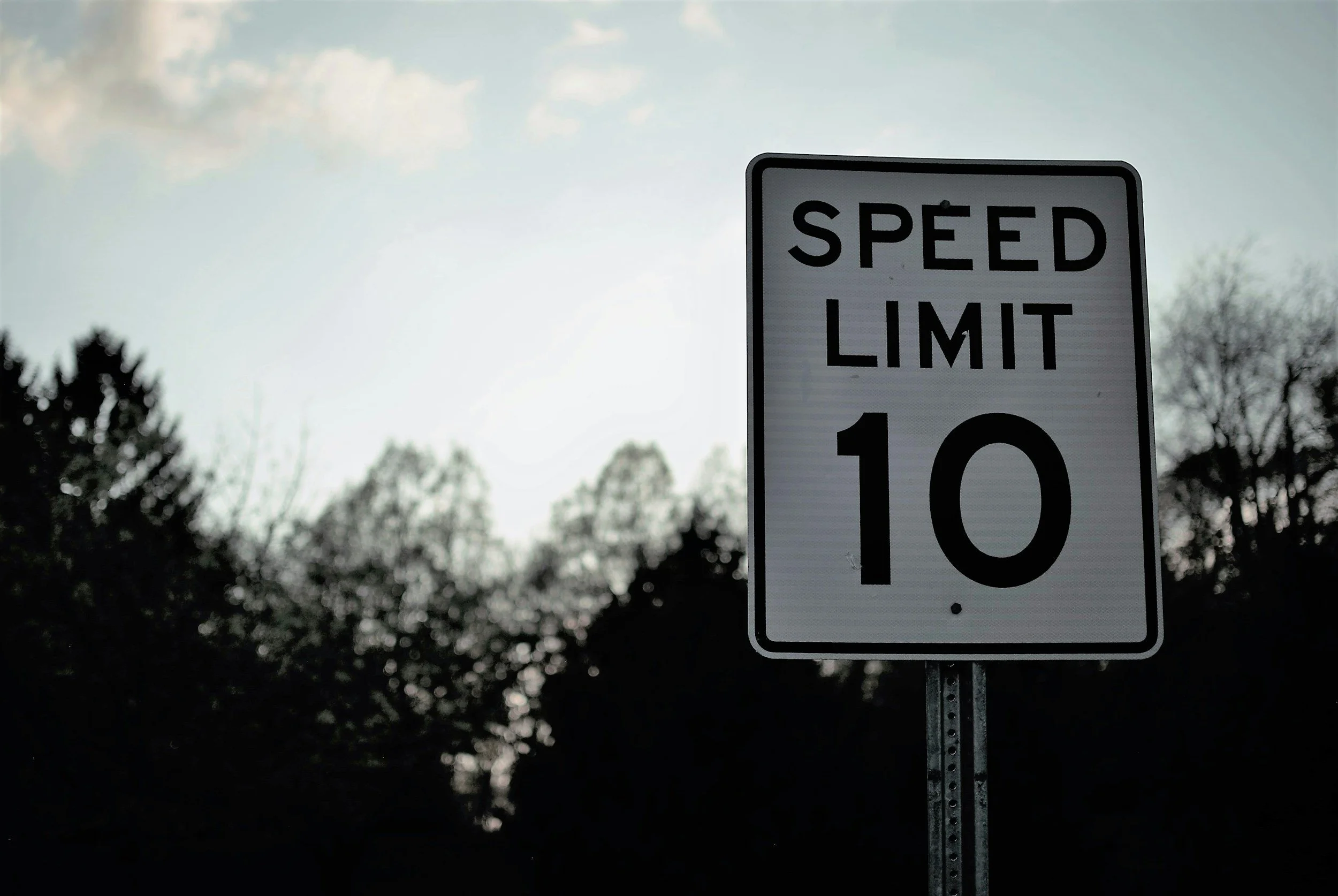
Recently it’s been the talk of the town (and the radio waves): Midstream Estate residents are up in arms over a new automated speed enforcement system that has seen fines of up to R4,000.00 (four thousand Rand) being issued to owners for the transgressions of courier drivers visiting them.
The uproar at Midstream highlights a critical confusion that many people living in community schemes face: Where does the municipality’s authority end and the Homeowners Association's (HOA) authority begin?
As our Senior Community Schemes Consultant Nicole Nel recently discussed on CapeTalk with John Maytham, there are very specific regulations around when and how an HOA or Body Corporate can impose fines. With the festive season upon us, bringing with it increased deliveries, visitors, and children playing in the street, it is vital to understand the rules of the road inside your HOA.
Public vs. private roads: The critical distinction
The first question to ask is: Are the roads in your HOA public or private?
In a standard gated HOA where access is strictly controlled, where the general public cannot simply drive in without signing in or being invited, the roads are typically classified as private.
Why is this so important?
On public roads, the National Road Traffic Act applies and only traffic officers may issue fines. On private roads, the relationship is contractual in nature. When an owner buys a property, they essentially sign a contract agreeing to abide by the HOA’s rules, contained in either the Memorandum of Incorporation (“MOI”) or Constitution or Conduct Rules which may include speed limits.
The Supreme Court of Appeal confirmed in Mount Edgecombe Country Club Estate Management Association II (RF) NPC v Singh and Others 2019 (4) SA 471 (SCA) (28 March 2019) that HOAs are allowed to set their own speed limits (even lower than the national standard) and enforce them through penalties, provided these rules are in the estate's governance documents.
The "courier conundrum": Why you pay for the delivery driver’s speeding
A major point of contention at Midstream is that owners are being fined for the transgressions of their delivery drivers. Legally, the HOA has no contract with the delivery driver only with the owner themselves. Most HOA rules explicitly state that owners are vicariously liable for the conduct of their invitees, tenants, guests, and employees.
If an owner’s courier driver speeds, the HOA fines the owner based on their legal relationship with the HOA. It is then up to the individual owner to take the issue up with the courier company to recover that cost, a frustrating administrative burden, but a legal reality in many community schemes.
Due process: No instantaneous fines
Just because an HOA can fine an owner, doesn't mean they have free rein. The Community Schemes Ombud Service (CSOS) places a high premium on due process.
Generally, a "penalty/fining rule" is only enforceable if it follows a fair procedure, which usually follows:
Written notice: The relevant owner must be informed of the breach.
The Warning phase: In many cases, specifically in Bodies Corporate, it is standard practice that a written warning must be issued for a first offence. Only on the second offence (after a warning has been given) should a fine be imposed.
Opportunity to be heard: The relevant owners must have the chance to dispute the fine or explain your side of the story before the money is debited.
A note on the "one month levy" cap:
There is a common misconception that fines in all community schemes cannot exceed your monthly levy. Bodies Corporate have a stricter limitation, capped at the equivalent of one month’s levy, in line with the CSOS Consolidated Practice Directives. HOAs have more flexibility, while fines must still be "reasonable" and not exorbitant, HOAs are not strictly bound by the "one month levy" cap, provided their specific MOI and constitution allows for higher penalties.
The festive season: safety vs. severity
This brings us to the "nuisance" theme of our newsletter this month.
We are currently in December; the "silly season." Roads are busier, families are visiting, and sadly, road accidents spike during this period. Speeding in a community scheme isn't just a breach of contract; it is a nuisance that endangers the lives of children, pets, and pedestrians.
While a R4,000 (four thousand Rand) fine for doing 35km/h in a 30km/h zone might feel excessive, and perhaps open to a "reasonableness" challenge at CSOS, we must acknowledge the danger of speeding in residential areas. A driver doing 60km/h in a quiet HOA could be a legitimate threat to the safety of others.
If you are expecting guests or deliveries this December:
Inform them of the rules before they arrive.
Check your estate's conduct rules regarding speed limits, fines and warnings.
Remember that ultimately, you are responsible for the infringements of your guests, tenants, visitors and yes even the drivers delivering your packages.
Drive safe, and enjoy the festive season!
Reach out to info@tvdmconsultants.com or call 061 536 3138, if you need assistance reviewing your scheme's current governance documents, in light of the above.

About the author
Sarah Sydenham is a community schemes consultants at TVDM Consultants.
Sarah is also an admitted attorney, brings a well-rounded legal background and a passion for community schemes to her role.
After completing her LLB at Stellenbosch University, Sarah pursued an LLM in Public Law at the same institution, where she was supervised by the former Public Protector, Professor Thuli Madonsela. During the final year of her master's degree, she worked at the Law Faculty's Social Justice Centre, understanding the practical influence of the law in everyday life.
Learn more about Sarah Sydenham.
