Apartments, bodies corporate and complexes: What’s the difference?
23 January 2026 | Nicole Tavares
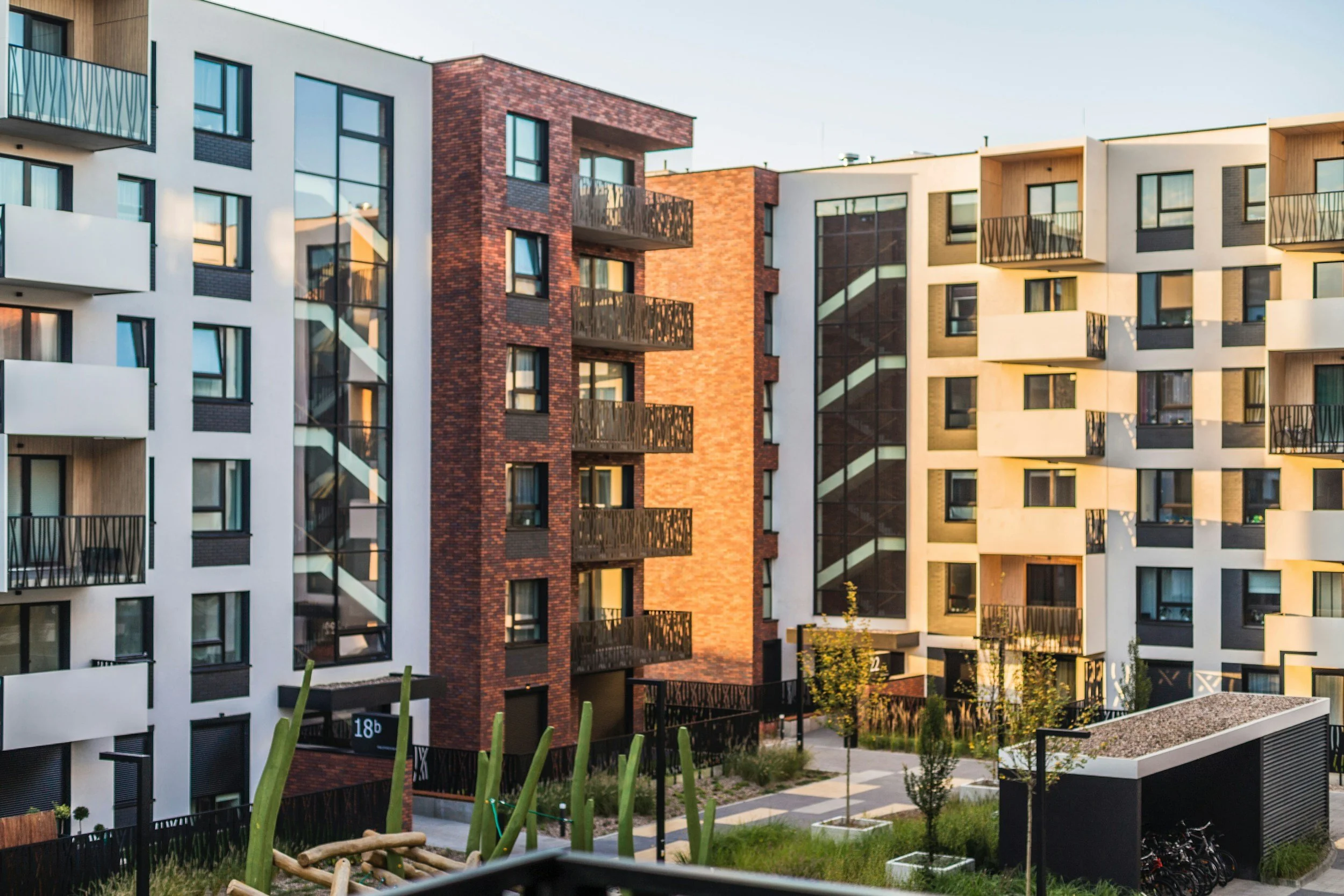
Houses, units, sections, townhouses, developments, gated communities, estates, sectional titles, share blocks and homeowners’ associations – the list goes on and on. Shakespeare’s “a rose by any other name” comes to mind however, with regard to the list above, while similar in nature, these names do in fact refer to different types of community scheme living.
This article will explore three (technically four) popular ways these “schemes” can be created in South Africa, by focusing on how they are set up, controlled, managed and governed.
1. What is a share block?
Before 1971 there was no legislation that allowed multiple people to own different parts of a building, meaning that if an apartment block was built, the developer was unable to sell the individual units as property. This saw the creation of “share blocks”, where developers formed a company that owned the building and then they sold shares in the company. The owner of the shares is then entitled to occupy a specific flat and use the common facilities of the building.
For example:
Name: TVDM (Pty) Ltd., (also referred to as “the company”).
Governed by: The Share Blocks Control Act 59 of 1980, Share Block Use Agreement, Memorandum of Incorporation (“MOI”), the Community Schemes Ombud Service Act 9 of 2011 (“the CSOS Act”), as well as the relevant municipal by-laws.
Led by: The Directors and shareholders of the company.
Ownership:
Shares in the company (no land/property) however, the shares you own are linked to a use agreement which provides a contractual right to exclusively occupy a specific unit and make use of the common facilities in the share block.
2. What is a sectional title scheme?
In order to keep up with modern living, the Sectional Titles Act of 1971 was introduced as the first national legislation which formalised a way to individually own a part of an immovable property together with a shared ownership of certain areas. To date, South Africans have experienced various amendments to this legislation. Finally, in 2011 the Sectional Titles Schemes Management Act 8 of 2011 (“the STSMA”) was promulgated and has since been in force. Keep in mind that the Sectional Titles Act 95 of 1986 still exists for the regulation of development and conveyancing requirements relating to a sectional title scheme.
For example:
Name: TVDM Body Corporate (also referred to as “scheme”).
Governed by: The STSMA including the Regulations, Prescribed Management and Conduct Rules contained therein, the lawfully amended Management and Conduct Rules of the body corporate, the CSOS Act, as well as the relevant municipal by-laws.
Led by: The trustees, as nominated and elected, by the members of the body corporate at an Annual General Meeting. In terms of the STSMA trustees are permitted to delegate their responsibilities and can appoint a managing agent to assist with the day-to-day management of the body corporate, both of which may only act on instruction by the trustees.
Ownership:
A section is your apartment/flat/living area, keep in mind that sometimes the number on your door might not be the same number on the sectional title plans. Every owner owns their section.
The common property is all the areas in the scheme that all owners have access to, including, but not limited to pathways, lifts, lawn areas. As common property cannot physically be equally divided among owners, every single owner of a section owns an undivided share of the common property.
A unit is the name given when you refer to both your section AND your undivided share of the common property together.
An exclusive use area remains common property in nature, but the right to use this area is granted to a specific owner. These rights can be registered at the deeds office or created in the rules of the scheme.
3. What is a homeowners’ association?
A homeowners’ association (“HOA”), while similar to a body corporate in that it comprises multiple owners, has vast differences. A HOA governs freehold developments where the association manages the common areas and can be created in two ways (1) A HOA as a common law association or (2) a HOA as a non-profit company.
3.1 HOA as a common law association
Name: TVDM Homeowners’ Association (also referred to as “estate/association”).
Governed by: common law, the Constitution of the association as well as their rules (both of which do not need to be approved by the Community Scheme Ombud Service), the CSOS Act for dispute resolutions, as well as the relevant municipal by-laws.
Led by: trustees or a trustee committee or board of trustees or management committee, as nominated and elected, in terms of the association’s Constitution, which will also set out whether the trustees must be members of the association. It is important to note that those members legally elected, have the power and authority as set out in the Constitution, which could include how the Constitution is amended.
Ownership:
Erf: your portion of land including the stand/dwelling/house/full title. Every owner owns their erf.
Common area: is all the areas in the scheme that all owners have access to, including but not limited to clubhouses, swimming pools and lawn areas. The common areas are owned by the HOA.
3.2 HOA as a non-profit company (NPC)
Name: TVDM Homeowners’ Association Non-Profit Company (also referred to as “estate/association/company”).
Governed by: the Companies Act 71 of 2008, the Memorandum of Incorporation (“MOI”) of the association as well as their rules (both of which do not need to be approved by the Community Schemes Ombud Service), the CSOS Act for dispute resolution, as well as the relevant municipal by-laws.
Led by: directors or a director committee or board of directors, as nominated and elected, in terms of the association’s MOI, which will also set out whether the directors must be a member of the association. It is important to note that those members legally elected, have the power and authority as set out in the MOI, which could include how the MOI is amended.
Ownership:
Erf: your portion of land including the stand/dwelling/house/full title. Every owner owns their erf.
Common area: all the areas in the scheme that all owners have access to, including but not limited to clubhouses, swimming pools and lawn areas. The common areas are owned by the association.
In conclusion | Understand your property
As evident above, there are a few ways in which communal living can be created and, regardless if you live in a house, unit, section, townhouse, development, gated community, estate, sectional title scheme, share block or a homeowners’ association you need to understand what you own, what you may use, what legislation you need to adhere to as well as who ultimately makes the decision/s.
Contact us today on 061 536 3138 or at info@tvdmconsultants.com if you require more information on the above.

About the Author:
Nicole Tavares | Co-Founder and Director of TVDM Consultants
Nicole started out her career with a focus on business studies, following which her journey in property law began. She embarked on paralegal and conveyancing courses, which allowed her the opportunity of joining Herold Gie Attorneys, where she was a correspondent conveyancing secretary.
Nicole continues to add to the community schemes industry with her experience in property, dispute resolution and business management, and is in the process of completing her BCom (Law) degree.
Learn more about Nicole Tavares.