When can a body corporate sue the developer without a special resolution?
Central Developments Tshwane (Pty) Ltd and Another v Body Corporate, Twee Riviere Aftree Oord (635/2019) [2020] ZASCA 107 (21 September 2020)
Introduction | Special resolution and suing for defective building work
We often get asked by trustees and managing agents whether a body corporate can sue a developer for defective building work — and, crucially, whether doing so requires a special resolution. This question commonly arises in cases involving construction defects that affect common property, where clear understanding of the body corporate’s legal authority is essential for timely and effective action. A ruling by the Supreme Court of Appeal (SCA) offers important guidance, confirming when a body corporate may lawfully institute legal proceedings under the Sectional Titles Schemes Management Act 8 of 2011 (STSMA).
This article examines the key legal principles established in Central Developments Tshwane (Pty) Ltd and Another v Body Corporate, Twee Riviere Aftree Oord (635/2019) [2020] ZASCA 107 (21 September 2020), highlighting the circumstances in which a body corporate can proceed without obtaining a special resolution—particularly when the claim concerns damage to common property.
Background and legal framework
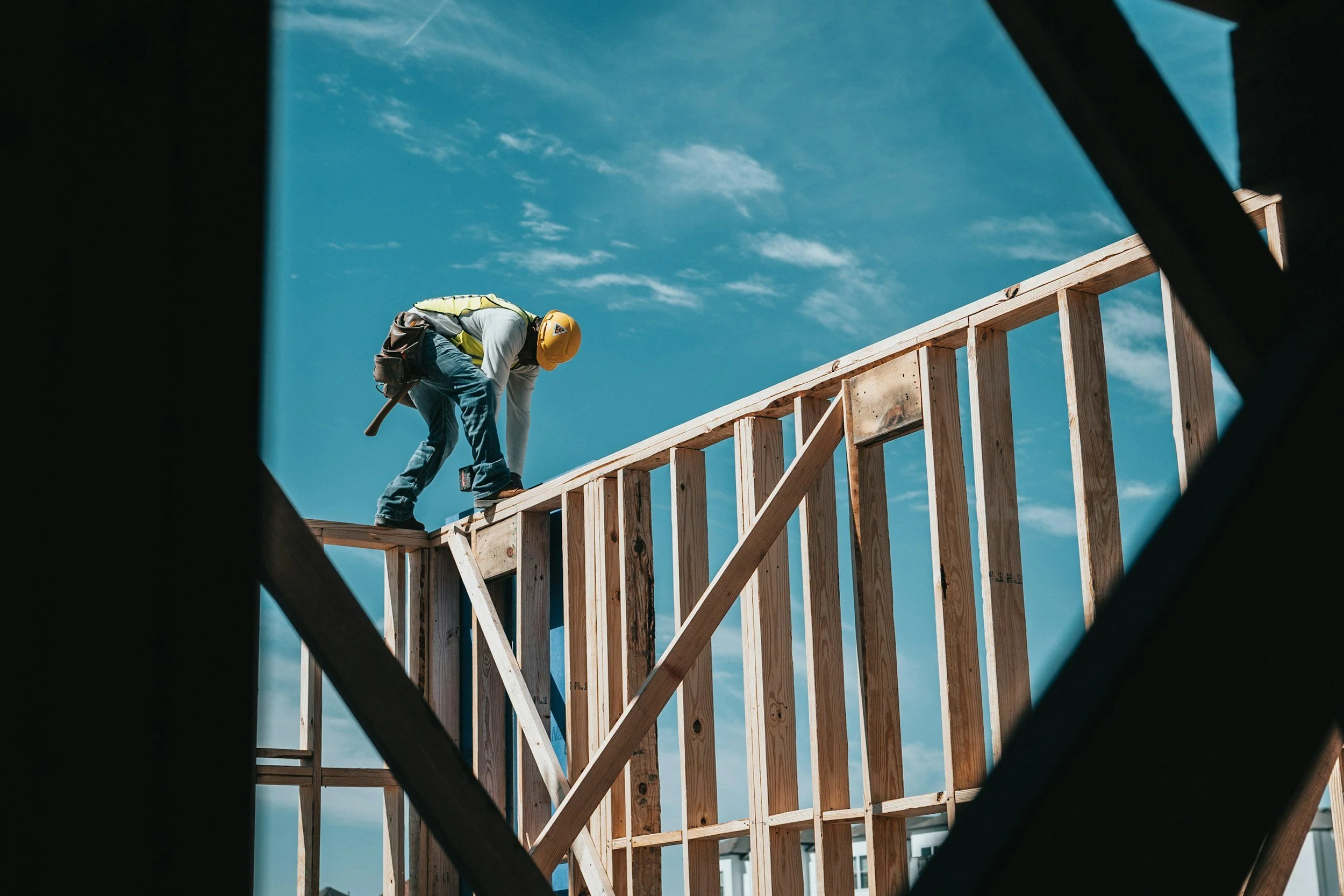
The dispute concerned structural defects at Twee Riviere Aftree Oord, a 448-unit retirement village developed as a sectional title scheme by Central Developments Tshwane (Pty) Ltd. The body corporate launched a delictual claim in the Gauteng Division of the High Court, Pretoria, alleging negligence in the design and construction — especially defects affecting the foundations of courtyard and patio walls.
The developer challenged the body corporate’s authority to sue, arguing that section 2(7)(e) of the STSMA requires a special resolution before instituting claims against the developer in respect of the scheme. The High Court ruled that, although no special resolution was obtained initially, this failure could be ratified post facto. The body corporate appealed to the Supreme Court of Appeal (SCA), contesting the necessity of obtaining such a resolution at all.
The SCA’s analysis
The SCA dismissed the developer’s special plea, clarifying that section 2(7)(b) of the STSMA — not section 2(7)(e) of the STSMA — was the operative provision. Section 2(7)(b) of the STSMA empowers a body corporate to sue “in respect of any damage to the common property,” without the need for a special resolution.
The court reasoned that:
The claim concerned damage to common property, not broader claims “in respect of the scheme.”
Section 2(7)(b) of the STSMA enables bodies corporate to act on behalf of all unit owners, who jointly hold the common property in undivided shares.
Requiring all owners to sue individually or jointly would be impractical and unworkable.
This statutory power aligns with the body corporate’s obligations under sections 3(1)(a)(i) and 3(1)(i) of the STSMA to maintain, repair, and insure common property.
Importantly, the court emphasised that section 2(7)(b) of the STSMA grants bodies corporate the standing to sue for damage to common property regardless of whether the responsible party is the developer, architect, or any other liable entity.
Key takeaways
No special resolution is required for a body corporate to initiate legal proceedings under section 2(7)(b) of the STSMA for damage to common property — even if the claim is against the developer.
Section 2(7)(e) of the STSMA pertains to broader claims “in respect of the scheme” and does not apply to specific damage to common property.
The decision reinforces the legislative intent to empower bodies corporate to act efficiently and effectively in the collective interest of all unit owners.
Conclusion | SCA’s ruling
The SCA’s ruling in Twee Riviere sets an important precedent for bodies corporate seeking remedies for construction-related defects. It confirms that where damage affects common property — regardless of the responsible party — a body corporate may proceed without delay and without the procedural hurdle of a special resolution. The earlier High Court order requiring such a resolution was therefore overturned.
For legal advisors and practitioners, this case underscores the importance of framing claims correctly under the STSMA.
Read the full judgment here - http://www.saflii.org/za/cases/ZASCA/2020/107.html
If you are interested in seeking our legal advice, please email info@tvdmconsutlants.com or contact 061 536 3138 today!

Meet the Author
Rizaar Smidt is a Community Schemes Consultant at TVDM Consultants.
Rizaar studied at the University of the Western Cape, where he obtained his LLB degree Cum Laude. He served his articles of clerkship at STBB, a leading law firm in South Africa, gaining extensive experience in Property Law, as well as General and Commercial Litigation. Following articles, Rizaar was duly admitted as an Attorney of the High Court of South Africa, whereafter he was retained at STBB and practised as an Associate Attorney in their Litigation and Dispute Resolution Department. During his tenure, Rizaar independently managed a demanding civil and commercial litigation portfolio, to read more about Rizaar, click here.
Disclaimer: This article is the personal opinion/view of the author(s) and is not necessarily that of TVDM Consultants. The content herein is for information purpose only, and should not be seen as an exact or complete exposition of the law. Accordingly, no reliance should be placed on the content for any reason whatsoever, and no action should be taken on the basis thereof unless the application and accuracy has been confirmed by a legal advisor. TVDM Consultants and the author(s) cannot be held liable for any prejudice or damage resulting from action taken on the basis of this content.
