
What counts as an improvement to common property in a South African sectional title scheme
23 September 2026 | Nicole Tavares
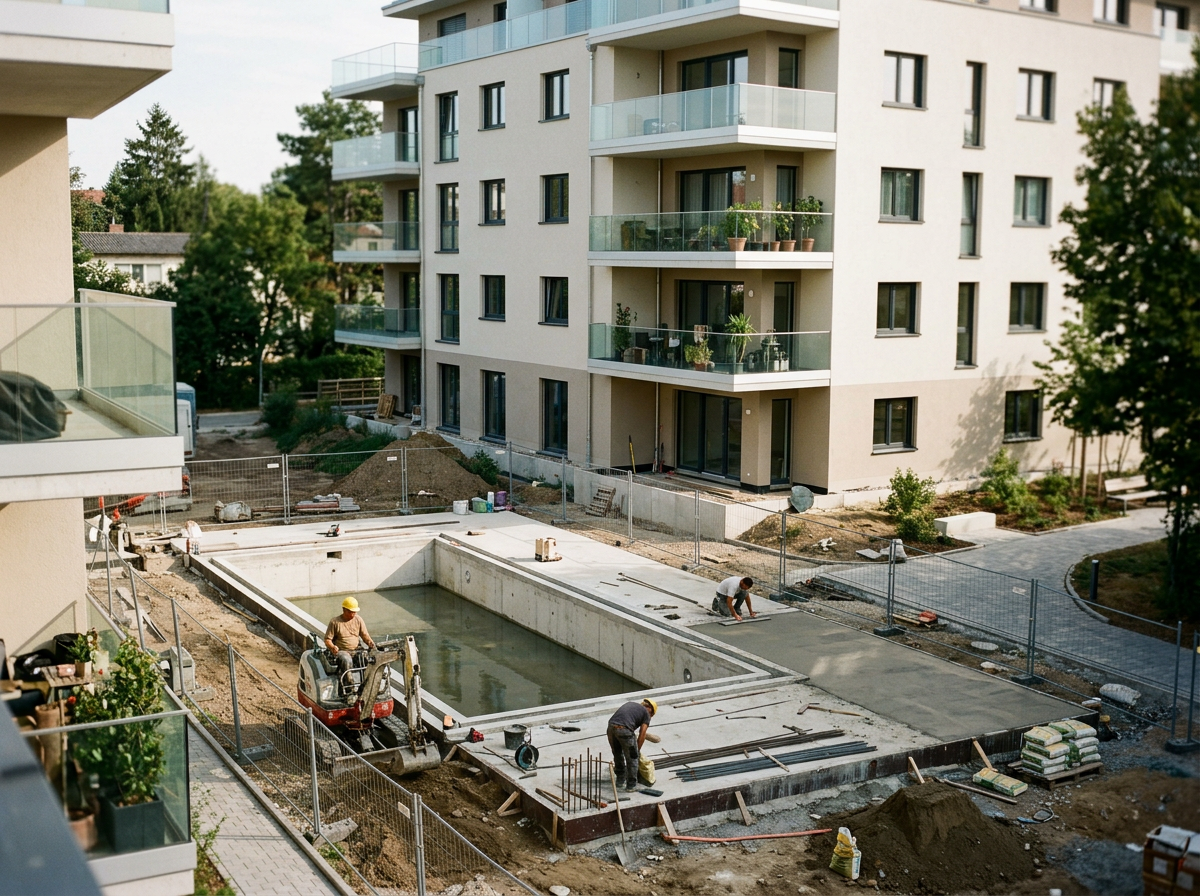
Swimming pools, solar panels, creating gardens. When would these “additions” be considered repairs and when do they constitute actual improvements? And why does this have the potential to cause tension?
Simply put, it comes down to whether trustees can make the decision, or if the decision must be taken via member resolution.
When is a change to common property not an improvement?
Repairs and maintenance are not improvements. Trustees have an ongoing duty to keep common property in good working order, funded through the administrative and reserve funds and guided by the 10 year maintenance, repair and replacement of the body corporate. None of which requires a member vote beyond the approval of the budget at the annual general meeting.
Where owners sometimes get it wrong is assuming that any visible change to the common property can only be done if the members have voted on the matter. To clarify, this is not the case, provided it's genuinely restorative and not an upgrade.
What is an improvement to common property?
An improvement is something different: a change that adds to, or enhances, common property beyond what's there already. The Regulations to the Sectional Title Schemes Management Act 9 of 2011 (“STSMA”) split improvements into two categories, and this is where even more confusion creeps up.
What is an improvement that is not reasonably necessary?
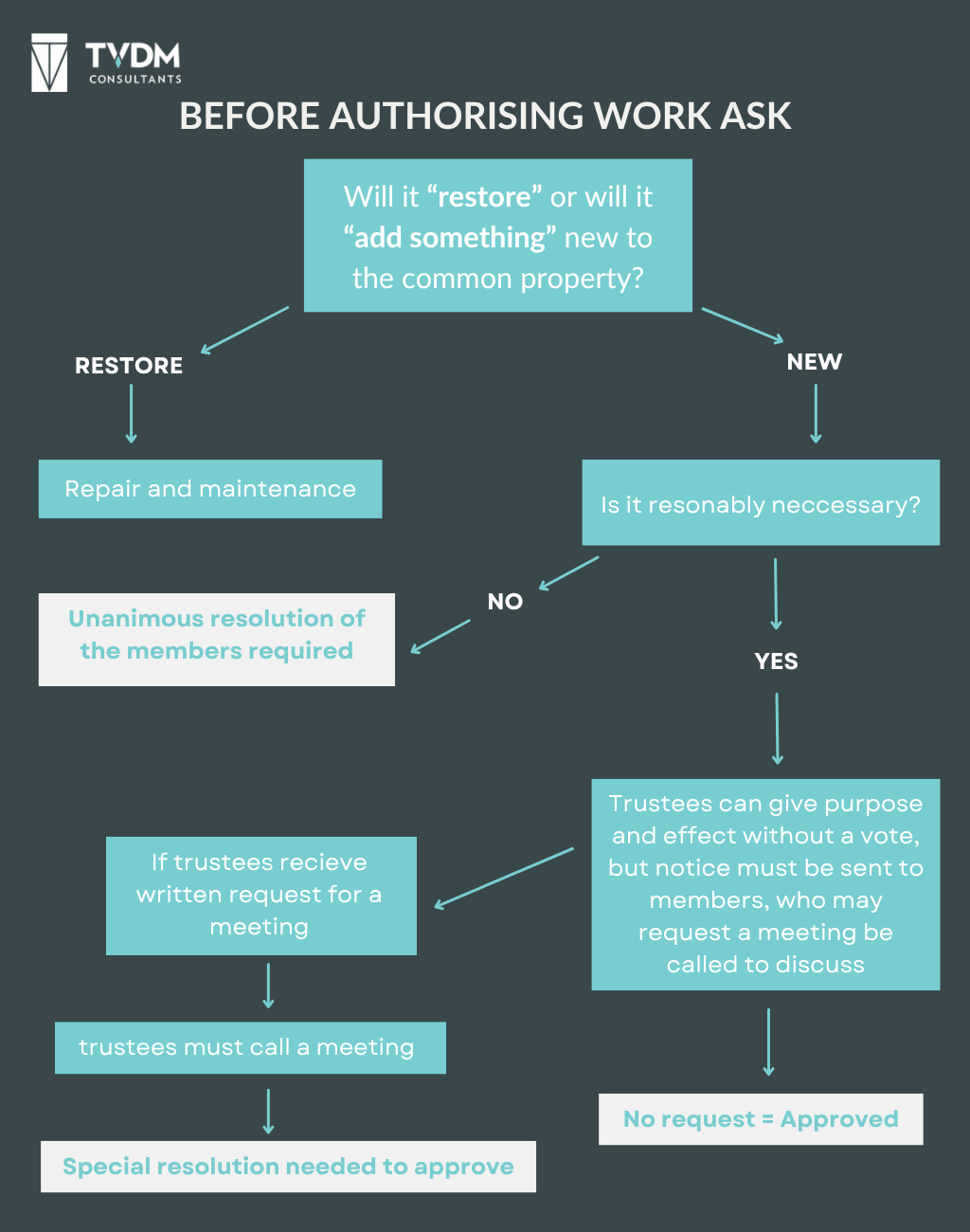
The first is an improvement that isn't reasonably necessary, under the Sectional Titles Act 95 of 1986 this was referred to as a "luxurious" improvement. For these improvements, trustees can only proceed on the authority of a unanimous resolution which requires the members of body corporate to take.
Examples that are commonly deemed to be not reasonably necessary:
A new swimming pool
Braai area or clubhouse
A gym or entertainment room
Ornamental landscaping
Water features or signage upgrades with no functional need
Upgrading finishes such as paving or cladding purely for aesthetics where the existing surface is sound
Adding a padel or tennis court
In practice this is a high bar, as it requires 100% of the members, who are present at the meeting, where there is a quorum of no less than 80% of the members of the scheme, making it easy for a single dissenting owner can to block something the rest of the scheme wants.
What is an improvement that is reasonably necessary?
The second is an improvement that is deemed to be reasonably necessary, like upgrading security infrastructure or a structural addition genuinely needed for the scheme's function. This is when the trustees have more room to move. The trustees can propose a reasonably necessary improvement and give effect to it without a vote at all, provided every member gets at least 30 days' written notice setting out the estimated cost, how the body corporate intends to fund it, and a proper motivation with drawings showing the effect of the proposal.
Examples that are commonly deemed to be reasonably unnecessary improvements include:
Replacing or upgrading a failing lift instead of just repairing it
Installing a fire detection or suppression system to meet a fire code upgrade
Access control, booms or electric fencing where security has become a genuine problem
A wheelchair ramp or other accessibility works
Waterproofing or structural remediation that goes beyond simple repair
Backup water or power systems, such as boreholes or generators, where municipal supply has become unreliable enough to threaten habitability
Can owners force a general meeting?
Yes, in fact all it takes is a single written request from any member, made within the 30-day notice period, requiring a general meeting to discuss the proposal. Once that happens, the proposal cannot proceed unless it is approved by special resolution at that meeting.
The 30-day notice period is therefore a live window during which any one owner can force the issue to a vote. If trustees have already committed funds or begun work before that period has expired, they may be exposed to challenge. The notice period is not merely a formality or a box to tick before proceeding; it is a period during which the proposal can still be formally brought before the owners for approval.
On the other hand, there are times when owners request a meeting, as a delaying tactic, without engaging with the substance of the proposal, which just as often backfires when the special resolution is then carried anyway.
What happens if trustees misclassify an improvement at maintenance?
The other recurring objection is sometimes the trustees mischaracterise an improvement as maintenance. If a "repair" leaves the common property materially better than it was, a like-for-like fence swapped for something more elaborate, a basic entrance upgraded to something ornamental, it has probably crossed the line into an improvement, and the notice and resolution requirements apply regardless of what it gets called in the trustees' minutes.
Practical checklist before making an improvement to common property
If you would like any additional information on the above, please contact info@tvdmconsultants.com today.

About Nicole Tavares
Nicole Tavares is a Co-Founder and Director of TVDM Consultants.
