Unpacking solar power in sectional title schemes
Legal pathways and practical guidance
30 May 2025 | Rizaar Smidt
As electricity prices continue to climb and load shedding remains a persistent reality in South Africa, many sectional title owners are turning to solar energy — not only as a backup power solution but as a way to reduce long-term electricity bills and lower their environmental impact. Solar energy offers both immediate and lasting value: it reduces dependence on the national grid, enhances energy security, and adds to the market appeal of properties equipped with renewable energy infrastructure.
For owners in sectional title schemes, however, the move to solar raises important legal and procedural questions. Chief among them: Are owners allowed to install solar panels on roofs that form part of the common property? Understanding the legal framework and practical considerations is essential for owners and trustees navigating this terrain.
This article explores the legal pathways available to owners and bodies corporate who wish to install solar panels — whether for individual use or communal benefit. We will also highlight how maintenance, liability, and cost responsibilities can be effectively regulated to ensure fair, sustainable outcomes for all parties.
Legal framework around solar panels
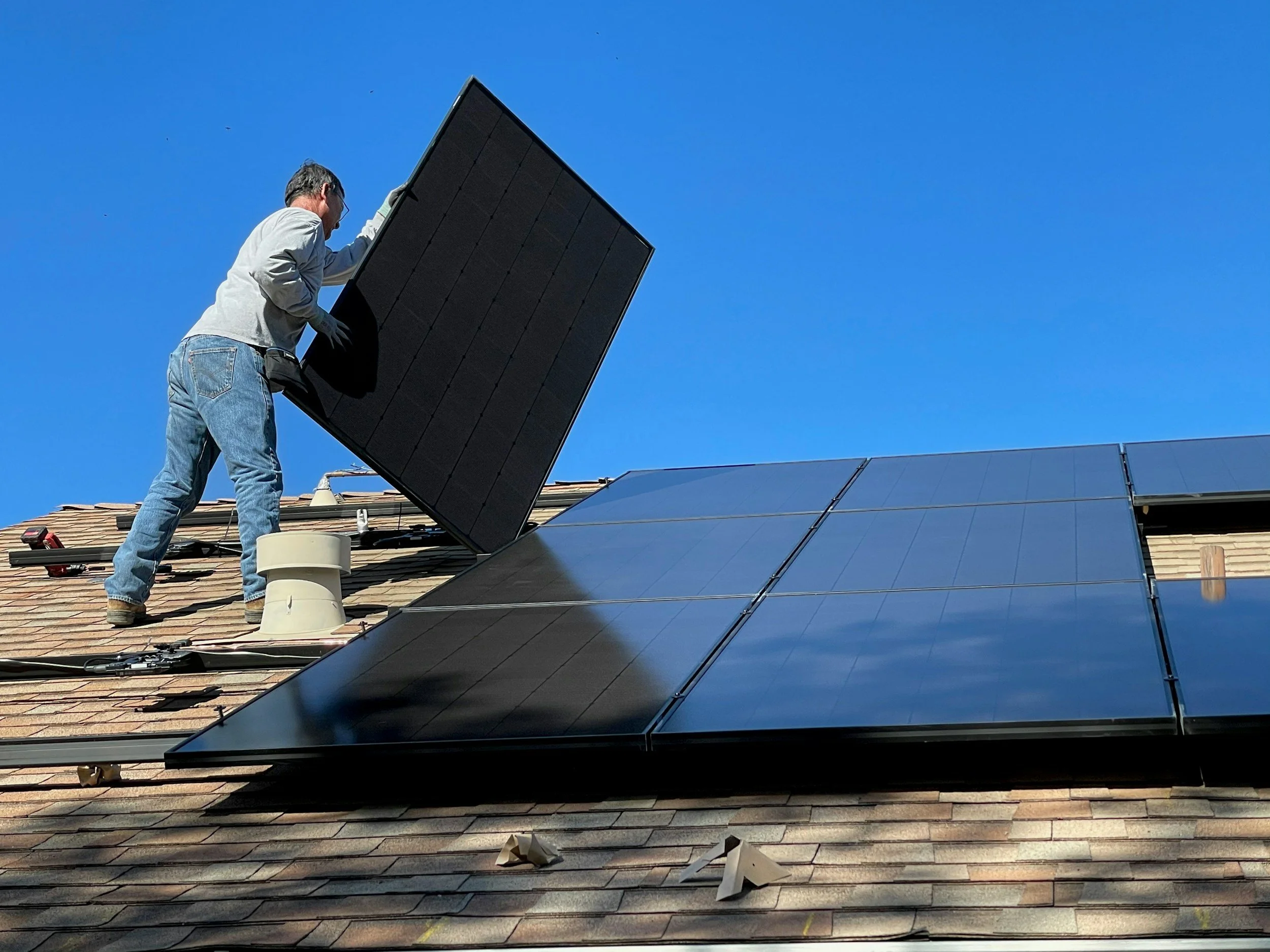
The installation and use of solar panels within sectional title schemes is governed by the Sectional Titles Schemes Management Act 8 of 2011 (“STSMA”) and its Regulations. These provide the foundation for how common property is managed and how individual rights must be exercised within the collective interests of the scheme.
Installing individual solar panels
When an owner wants to install solar panels on a roof — part of the common property — they cannot do so unilaterally. Formal consent and appropriate legal structuring are required. The most practical way to enable such use is by allocating an Exclusive Use Area (EUA) to the owner through a special conduct rule.
Owners should begin by reviewing the current conduct rules and consulting with the managing agent, building manager, or trustees. Any installation on common property generally requires trustee or member approval, depending on the scope.
Creating Exclusive Use Areas (EUAs)
The preferred legal mechanism for individual installations is to designate the portion of the roof as an EUA through an amendment to the scheme’s conduct rules. In terms of the STSMA, exclusive use rights may be conferred through conduct rules adopted by special resolution of the body corporate.
Amended rules should comprehensively address:
The precise positioning of solar panels on the roof;
Limits on the number and size of panels based on the section’s size or allocation;
Design specifications and installation standards;
Compliance certifications;
Ongoing maintenance obligations for both the panels and affected roof areas;
Indemnities for damage or injury;
Insurance responsibilities;
Access rights for inspections, and repairs;
Removal obligations for defunct or non-compliant installations.
The body corporate should also retain the right to perform emergency repairs or require removal at the owner’s cost if the installation falls into disrepair or violates safety standards.
Importantly, a layout plan and allocation schedule must accompany the amended rules and be submitted to the Community Schemes Ombud Service (“CSOS”) after being approved by special resolution. These rules will take effect and become enforceable upon approval by the CSOS, which will issue a certificate confirming such approval.
The STSMA further provides that owners granted exclusive use must pay an additional contribution (above regular levies) to cover maintenance or costs linked to their exclusive area, unless the amended rules specify that the owner bears those costs directly.
Installing solar panels for common benefits
Now, what if the body corporate wishes to install solar panels for communal benefits, such as powering basement lighting or elevators? Such installations are considered improvements to common property and must be evaluated by the trustees to determine whether they are “reasonably necessary” or “not reasonably necessary” given the context of the energy crisis, trustees can generally motivate that the installation of solar panels is a reasonably necessary improvement.
Prescribed Management Rule 29(2) of the Regulations to the STSMA permits the body corporate to make alterations or improvements to common property that are deemed reasonably necessary. The aforesaid rule states that no proposal for alterations or improvements to the common property may be implemented until all members receive at least 30 days' written notice with details of:
the estimated costs associated with the proposed alterations or improvements;
details of how the body corporate intends to meet the costs, including details of any special contributions or loans by the body corporate that will be required for this purpose, and
a motivation for the proposal including drawings of the proposed alterations or improvements showing their effect and a motivation of the need for them.
If any member requests a general meeting during this notice period to discuss the proposal, the proposal must not be implemented unless it is approved, with or without amendment, by a special resolution adopted at a general meeting. Notably, the aforementioned notice period can be bypassed if the trustees opt to call a special general meeting directly.
Conclusion | Solar will benefit community schemes
In a time of rising energy costs and national grid instability, solar energy offers sectional title schemes an opportunity to move toward greater independence and sustainability. Whether initiated by individual owners or adopted collectively by the body corporate, solar installations can significantly enhance quality of life, reduce expenses, and increase property value — provided the legal framework is properly followed.
By adhering to the correct procedures and aligning installations with the STSMA and its Regulations, community schemes can responsibly embrace renewable energy while ensuring the long-term integrity and harmony of the scheme.
If you would you like us to write an article for your company, contact info@tvdmconsultants.com for more information.

About the Rizaar Smidt
Rizaar is a Community Schemes Consultant at TVDM Consultants
Rizaar studied at the University of the Western Cape, where he obtained his LLB degree Cum Laude. He served his articles of clerkship at STBB, a leading law firm in South Africa, gaining extensive experience in Property Law, as well as General and Commercial Litigation. Following articles, Rizaar was duly admitted as an Attorney of the High Court of South Africa, whereafter he was retained at STBB and practised as an Associate Attorney in their Litigation and Dispute Resolution Department. During his tenure, Rizaar independently managed a demanding civil and commercial litigation portfolio.
To find out more about Rizaar, click here.
